
Concrete Pressed Piers Fort Worth
A+ BBB Accredited Business
See Our Google Reviews
FREE DETAILED INSPECTION
Schedule Your FREE, No-Obligation Estimate Today!
We Only Use the Best in Foundation Repair Methods
The foundation of your Fort Worth home is the base of its structural integrity. When issues occur, they must be addressed immediately. But which repair method is best?
Concrete-pressed piers are a popular option because they are affordable, time-efficient, and suitable for spaces with limited access. But are they right for your home? RS Foundations will review foundation repair methods, offer options, and help you determine which is suited to your situation.
Find us on...


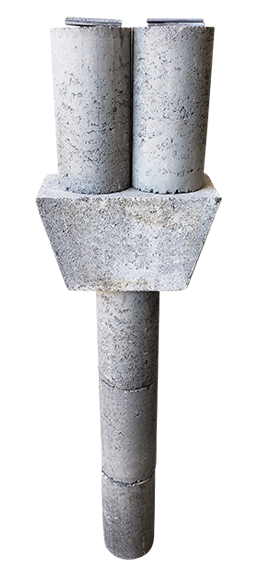
What are Concrete Pressed Piers?
Concrete pressed piers are stacks of precast concrete cylinders, typically 6 inches in diameter and 12 inches tall. They are hydraulically pressed into the ground beneath a structure using the building's weight or hydraulic rams until they reach a point of refusal. The piers rely on soil friction for support rather than deep, load-bearing strata, typically penetrating 3-15 feet into the ground, depending on the home's weight and soil conditions.
How are Concrete Pressed Piers Installed?
The process for concrete pier installation is as follows:
-
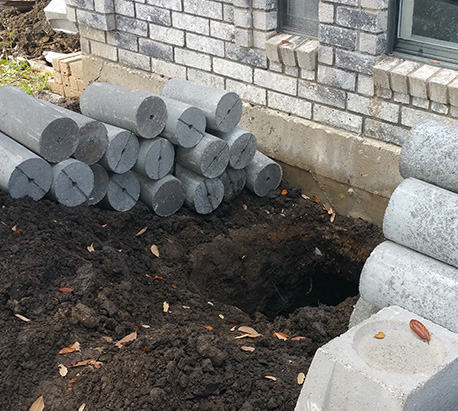
Site Preparation: Protective covers are laid, and pier locations are marked. Contractors will also identify utility hookups.
-
Excavate Holes: 3x3 holes are cut below the grade beam.
-
Install Cylinders: Cylinders are stacked under the grade beam, and a hydraulic pump is used to press them to a point of refusal.
-
Lift & Shim: The house is lifted in sections, and steel shims are placed beneath each section for accurate leveling.
-
Backfill & Finish: Holes are filled, concrete is patched, and plants are replaced to restore the home's appearance.
What are the Benefits of Concrete Pressed Piers?
Concrete piers offer several benefits in addressing foundation issues, as follows:
-
Withstands Moisture and Erosion: Concrete piers won't rot with exposure to moisture. Additionally, because they are driven into the ground, they aren't as affected by normal surface erosion.
-
Provides Support for Your Home's Foundation: Once installed, the piers will transfer your home's weight from the settling surface soils to the more stable soils below, closing cracks in walls and ceilings, helping doors and windows operate more smoothly, and reducing the risk of further settlement.
-
Quick Installation: Because the cylinders are precast, they do not require curing, reducing installation time. Total installation typically takes 1-3 days.
-
Reaches Deeper Depths than Other Methods: Compared to shallow spot repairs, concrete-pressed piers go deeper into the ground for optimal support.
-
Less Abrasive on Your Landscape: Because installation is performed in hand-dug pits rather than large excavation sites, the soil is less disturbed, reducing the risk of damage to your driveways, patios, walkways, and lawns.
Here is what the foundation repair process looks like when you call RS Foundations:
STEP 1
Call RS Foundations for a FREE, no-obligation estimate.
STEP 2
One of our trained structural analysts will arrive at the scheduled time to evaluate your home or business. This process generally takes about an hour, but we are willing to take longer to answer any questions you have.
STEP 3
Our technician will draw up a detailed program of your home and measure all areas with a Technidea Ziplevel precision altimeter, which allows us to measure differences in the foundation within 1/10 of an inch.
STEP 4
We will go over our findings with you and discuss a repair plan if foundation repair is recommended.
STEP 5
We provide a written estimate on-site along with a copy of the detailed repair plan.

Best Use Cases for Concrete Piers
Reputable foundation repair companies will help you review your options. However, concrete piers are often used in the following situations:
-
Expansive Clay Soil Regions: Concrete piers can be useful in bypassing clay soil and reaching more stable soil deeper in the ground.
-
Limited Access Sites: The hand-dug method is preferable for homes with tight crawl spaces and limited access that prohibit large drilling rigs and wide excavation.
-
Slab Foundation Repairs: Concrete piers are typically best for concrete slab foundations, rather than pier-and-beam foundation repair, because they support a rigid, continuous concrete beam. However, they can be useful in addressing foundation problems in both structure types.
-
Moderate Settlement in Heavy Soil: The method can solve moderate settlement issues quickly and cost-effectively.
How Do I Know I Need Foundation Work?
You can't see the foundation of your home, but you may notice signs that tell you repair work is necessary. Here are some to look out for:
-
Cracks in your walls and ceilings.
-
Sloping Floors: You may feel a tilt as you walk across your room or detect a noticeable slope.
-
Doors and Windows may stick or be difficult to open or close.
-
Gaps at your baseboards, cabinets, and countertops.
-
Drainage issues, including water pooling near your foundation, soil erosion, or large trees near your home sucking in the moisture from the soil.
We Appreciate the Kinds Words from Our Customers

Andrew H.
Frequently Asked Questions
Why Choose RS Foundations?
RS Foundations is among the top foundation companies in the Fort Worth area. Customers prefer us because we offer:
-
Lifetime Warranty: All customers receive a lifetime, transferable warranty that supports them throughout home ownership and increases home value.
-
Free Foundation Evaluations: We will inspect and evaluate your foundation issues at no cost, with no obligation to accept our services.
-
Reasonable Pricing: RS Foundations keeps foundation repair costs low by offering reasonable pricing, free inspections, and financing options.
-
Excellent Customer Service: We aim to build lifelong relationships with our clients, based on trust and excellent service.
Contact us for your free estimate today.